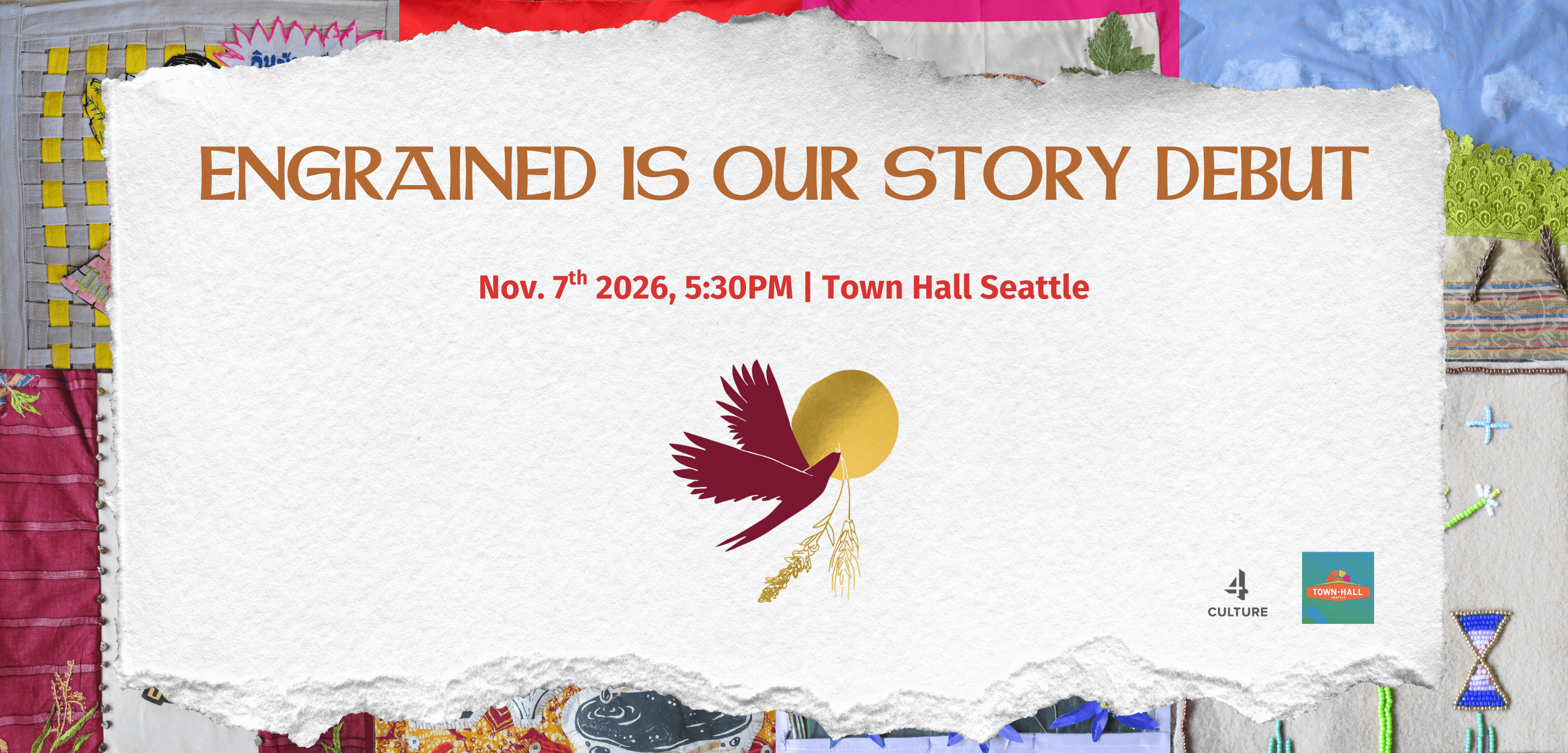
TICKETS FOR OUR DEBUT EVENT ARE ON SALE NOW!
Join us for an evening of agricultural dances, song, oral-storytelling, art, and a dinner featuring the very ingredients preserved in our seed bank.
According to the Washington State Grain Commission, Washington consistently ranks as one of the nation's top four wheat producers, harvesting 143 million bushels of wheat in 2024 (Washington State Grain Commission, 2024). This mass production of wheat contributes to environmental vulnerabilities such as soil salinity, drought, and wildfires. Chemical intensive wheat farming practices deplete the soil's nutrients and poison our water. The modern grain also has a high glycemic index and inflammatory properties, contributing to many diseases, such as celiac, diabetes and even brain fog.
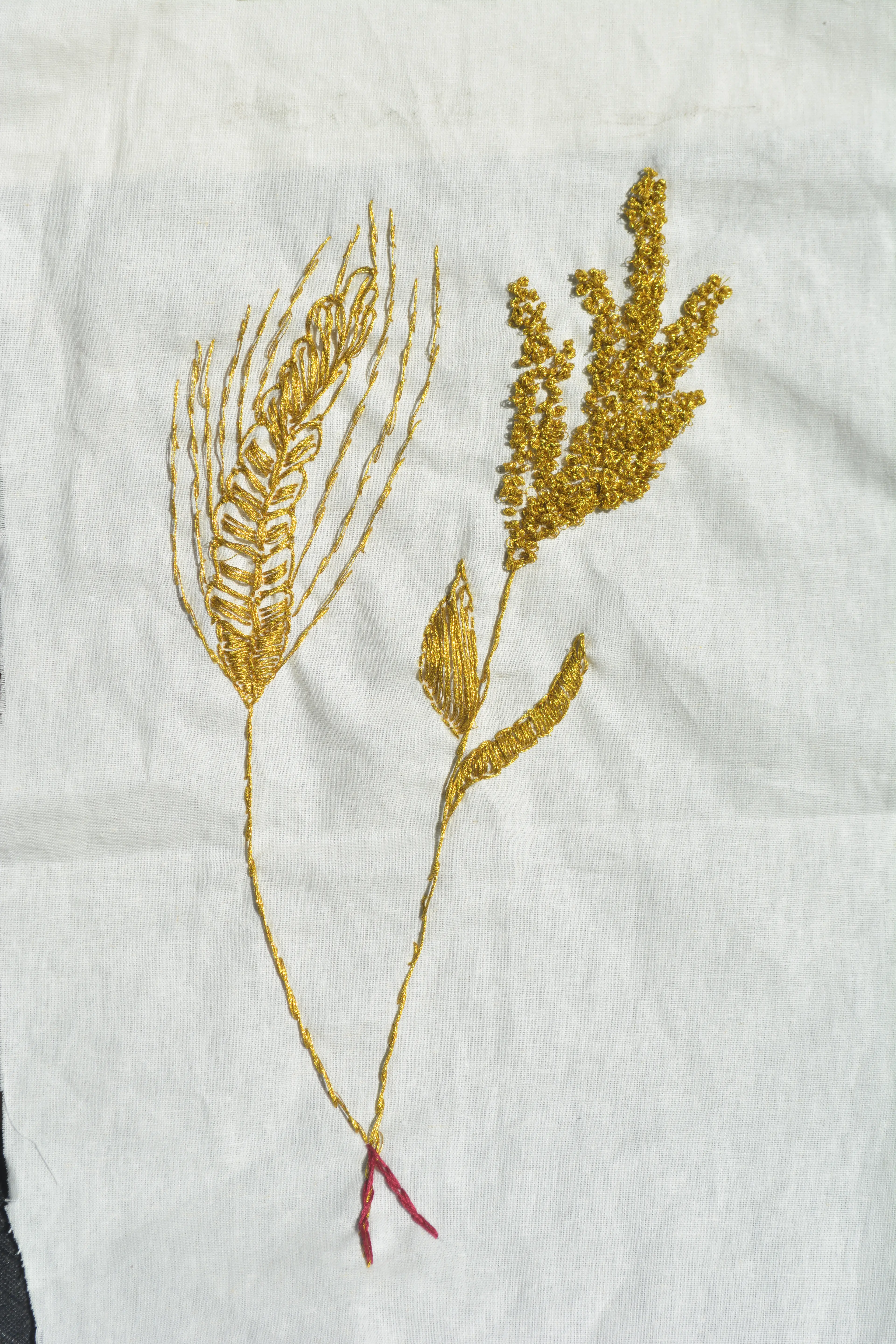
To counter the corporate narrative, we amplify sustainable, healthy alternatives to industrial wheat through our project Engrained is Our Story: A living seed-bank and story-telling quilt. We need now, more than ever, to follow our ancestral strategies of saving resilient seeds and their stories. Through centering oral histories in our fabric seed-bank, we archive the diverse knowledge needed to re-root our food-systems, and build community capacity to protect our resources.
Beginning in 2024, we collaborated with Haki Farmers Collective, Chimacum Grainery, Lummi Nation, Swinomish Nation, the Confederated Tribes of Umatilla Indian Reservation, La Milpa Masa Company, Kati Vegan Thai, Washington State University’s Bread lab, Wild Muddy Farms, Rose Island Farms, Wild Dreams Farms, Ojaswe Co., and Duwamish Nation. Together we planted, harvested, and learned about the seeds contained within this seed-bank. Through the process of creating this seed-bank, Engrained is Our Story naturally grew into a community, due to every participants' shared activism and powerful beliefs that together, we can heal Washington's food system. As we grew together, we celebrated the power of each other's diversity, shared cultural meals, tasted each other's culinary products, and reciprocally exchanged our living and ancestral food stories.
Simren and Fatema recorded oral stories that will accompany the completed quilted seed bank, so that the seeds can forever be empowered by the ancestral wisdoms associated with them, and never be erased by the corporate strategies of homogenizing diversity in the name of profit. The seeds in this quilt are viable for planting, should the time come to need these seeds as tools to survive a social and environmental crisis.